Executive summary
This case study presents the development, engineering and delivery of a 20 MWp utility-scale solar photovoltaic power station in Nigeria.
Designed, installed and project-managed by RESDAC Systems Limited, the facility supplies renewable energy directly to a multi-industry industrial area operating as a captive customer through a dedicated 33kV distribution network.
The project provides stable, cost-effective clean power while reducing dependence on diesel generation and an unstable grid.
Background and objectives
Nigeria’s industrial sector faces grid unreliability, high diesel costs, voltage fluctuations and production downtime. A dedicated renewable facility was developed under a private-power arrangement to address those constraints.
Project objectives
- Develop a 20 MWp captive solar plant
- Deliver direct 33kV supply to an industrial cluster
- Reduce diesel-generator reliance
- Improve voltage stability and power quality
- Ensure availability above 99%
- Provide centralised monitoring and operational control
Site
- Location: Nigeria, West Africa
- Site area: 100 hectares
- Land use: dedicated renewable-energy generation
- Adjacent to a multi-industry industrial estate
- Dedicated service road and controlled entry points
System architecture
Solar PV array
- 20 MWp installed capacity
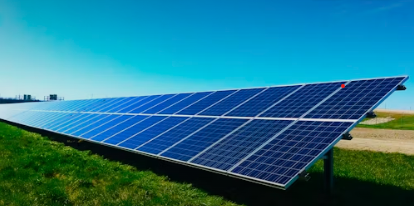
- 40,000 ground-mounted modules
- 2 × n dual-row layout
- 20 MW AC capacity
- Distributed inverter topology
Why the 2 × n configuration
- Optimised land use
- Improved airflow and thermal performance
- Efficient maintenance access
- String balancing
- Reduced shading losses
Inverter system
- 40 × 500 kW networked inverters
- Real-time monitoring and remote diagnostics
- Power-factor control
- Voltage and frequency regulation
- Redundancy, fault isolation and maintenance flexibility
| Parameter | Specification |
|---|---|
| Installed capacity | 20 MWp |
| Modules | 40,000 |
| Mounting | Ground-mounted |
| Configuration | 2 × n layout |
| AC capacity | 20 MW |
Grid interface and captive power delivery
Power is exported directly at 33kV to the industrial area via a dedicated feeder.
33kV switchyard
- Step-up transformers
- 33kV switchgear
- Protection relays
- Metering systems
- Synchronisation equipment
- SCADA integration
Power-delivery configuration
- Embedded generation
- Industrial-grade protection coordination
- Revenue-grade metering at the point of delivery
- Voltage and frequency compliance
- Reduced transmission losses
- Improved reliability and controlled pricing
Control and monitoring
Central Control Room
- Energy Management System
- SCADA servers
- Communication infrastructure
- Industrial-feeder monitoring
- Protection and relay interfaces
- Security monitoring
Energy Management System
- Real-time performance analytics
- Inverter-level monitoring
- Industrial-demand tracking
- Power-quality and alarm management
- Historical data storage
- Remote access
- Dynamic response to industrial load fluctuations
Security and site infrastructure
The 100-hectare site is secured through systems integrated into the Central Control Room dashboard.
- Full perimeter fencing
- Vibration and motion detection
- IP-based CCTV surveillance
- Access-control gates
- 24/7 monitored security operations
Engineering, construction and project management
Engineering
- Feasibility and solar-resource studies
- Electrical system design and industrial load profiling
- Grid-interface protection and power-quality studies
- Switchyard design
- Civil and structural engineering
Construction
- Site clearing and grading
- Ground-mount structure and 40,000-module installation
- 40-inverter deployment
- DC/AC cable routing
- Transformer and 33kV switchyard construction
- Dedicated feeder and CCR construction
- Security infrastructure deployment
Project management
- Procurement and logistics
- Contractor supervision
- QA/QC and HSE compliance
- Budget and schedule management
- Commissioning and performance verification
Health, safety and environment
- Comprehensive HSE plan
- Zero major lost-time incidents
- Environmental-impact mitigation
- Controlled stormwater management
- Waste-recycling protocols
Commissioning and performance
The plant achieved successful operational handover to the captive industrial customer operator.
Testing
- String and insulation verification
- Inverter functional testing
- Transformer and switchgear testing
- Protection-relay configuration
- Load simulation
- Synchronisation and industrial-load acceptance
Performance indicators
- 20 MWp installed capacity
- Availability above 99%
- Stable 33kV supply
- Reduced industrial downtime
- Lower operational energy costs
Industrial impact
- Reduced diesel consumption
- Lower carbon footprint
- Improved voltage stability
- Reduced energy-cost volatility
- Enhanced production reliability
Risk mitigation
| Risk | Mitigation |
|---|---|
| Grid instability | Captive-supply configuration |
| Diesel fallback dependency | High-availability system design |
| Equipment failure | Distributed inverter redundancy |
| Security threats | Integrated surveillance |
| Load fluctuation | EMS-based demand tracking |
Sustainability impact
Engineering that moves the energy system forward.
- Reduced diesel generator consumption
- Lower carbon footprint and noise pollution
- More predictable industrial energy pricing
- A replicable model for industrial decarbonisation across West Africa
Explore the complete RESDAC project legacy.
Back to the timeline